
Why Does My Dog Keep Getting Ear Infections?
If your dog has had more than one ear infection, you may already know the routine.
The head shaking starts. Then comes the scratching. Maybe you notice an unpleasant smell or dark debris inside the ear.
Treatment clears everything up, and for a while things seem normal.
Then a few weeks or months later, it happens again.
Recurring ear infections are frustrating for both dogs and their owners, but there is an important reason they often come back: the infection itself may only be part of the problem.
Why Are Dogs Prone to Ear Problems?
A dog's ear canal is shaped differently from ours.
Rather than travelling almost straight inward, the canine ear canal has both vertical and horizontal sections. This creates a warm, relatively enclosed environment where moisture, wax, yeast, and bacteria can accumulate.
Some dogs are naturally more susceptible because of their ear shape, skin type, hair growth, lifestyle, or underlying medical conditions.
Dogs that swim frequently may develop problems because moisture remains trapped in the ear canal.
Dogs with heavy or floppy ears may have less airflow.
But anatomy alone does not explain every recurring infection.
Yeast and Bacteria Are Often Secondary Problems
Ear infections commonly involve an overgrowth of yeast, bacteria, or sometimes both.
These organisms can live in small numbers on healthy skin without causing problems.
When the environment inside the ear changes because of inflammation, moisture, allergies, or another underlying issue, they can multiply.
This is why simply treating the yeast or bacteria may not permanently solve the problem.
If something continues to create inflammation inside the ear, infections may keep returning.
Allergies Are a Common Underlying Cause
One of the most frequent reasons dogs experience recurring ear infections is allergic skin disease.
Some dogs develop environmental allergies to substances such as pollen, grasses, moulds, or dust mites.
Others may have food-related allergies.
While people often think of allergies as an itchy skin problem, the ears are actually part of the skin system.
For some dogs, recurring ear inflammation may be one of their earliest or most noticeable allergy symptoms.
You may also notice paw licking, face rubbing, redness between the toes, recurrent skin infections, or generalized itching.
Ear Mites and Foreign Material
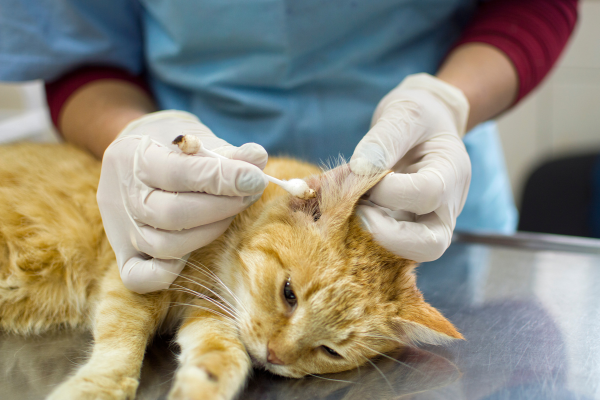
Ear mites are more commonly associated with cats but can occasionally affect dogs, particularly young animals or dogs that have been exposed to infected pets.
Foreign material can also trigger ear irritation.
A grass awn or other plant material may become lodged inside the canal, causing sudden head shaking, discomfort, and inflammation.
If only one ear is repeatedly affected, your veterinarian may consider whether something inside that particular ear is contributing to the problem.
What Does an Ear Infection Look Like?
Dogs with ear discomfort may shake their head, scratch around the ears, rub their face along furniture or carpeting, or resist having their ears touched.
You may notice redness, swelling, waxy debris, discharge, or an unusual smell.
Some dogs become surprisingly quiet because their ears are painful.
If the infection extends deeper into the middle or inner ear, symptoms can become more serious. Head tilt, loss of balance, abnormal eye movements, or difficulty walking require prompt veterinary attention.
Why Testing Matters
Not every ear infection should be treated exactly the same way.
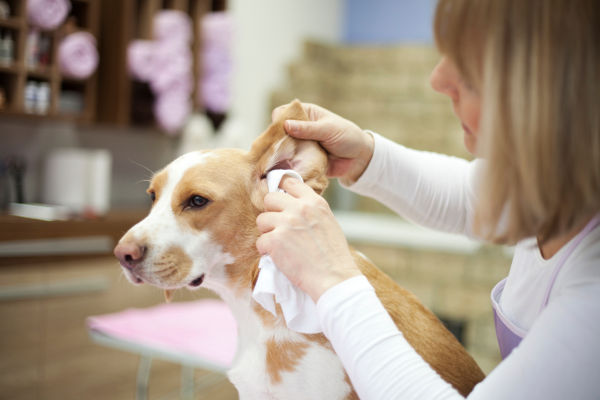
Your veterinarian may collect a small sample of material from inside the ear and examine it under a microscope.
This process, called cytology, helps identify whether yeast, bacteria, inflammatory cells, or other organisms are present.
That information helps guide treatment.
For severe, chronic, or difficult infections, additional testing may sometimes be necessary.
Be Careful With Home Remedies
The internet is full of homemade ear-cleaning solutions.
Unfortunately, putting the wrong substance into an inflamed ear can make things worse.
Certain products can irritate damaged tissue, and some medications or cleaners may not be appropriate if the eardrum has been injured.
Cleaning too aggressively can also create additional inflammation.
If your dog's ear is red, painful, producing discharge, or has a strong odour, it is safer to have the ear examined before experimenting with home treatments.
Preventing the Next Infection
Prevention depends heavily on why the infections are happening.
For some dogs, routine ear cleaning with a veterinary-recommended product helps control wax and moisture.
Dogs that swim may benefit from having their ears dried appropriately afterward.
For dogs with allergies, controlling the underlying allergic disease can significantly reduce recurring ear problems.
Other dogs may require management of hormonal conditions, skin disease, or structural changes inside the ear canal.
There is rarely one universal solution.
Don't Just Treat the Infection—Ask Why It Keeps Happening
An occasional ear infection can happen to almost any dog.
When infections repeatedly return, however, it is worth looking beyond the ear itself.
Treating the immediate infection is important because ear infections can be uncomfortable and painful. But identifying the underlying reason they keep developing is often what makes the biggest difference long term.
If your dog seems to be stuck in a cycle of ear infections, talk with your veterinary team about whether there may be an underlying cause that needs to be addressed.
