
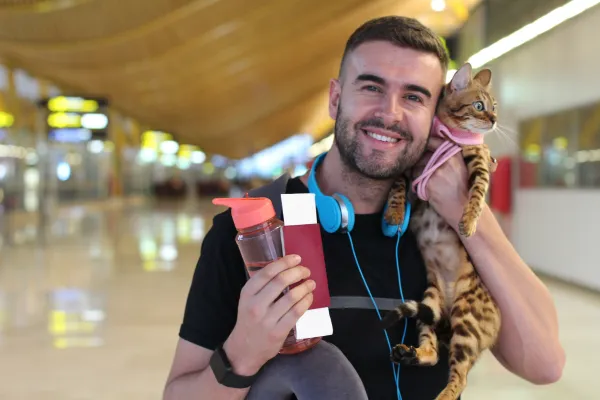
Safe Air Travel for Pets
Holiday travel season often means more families are planning trips — and they want to bring their pets along. We love that! But flying with your dog or cat isn’t as simple as packing their favorite toy. At Ospika Animal Hospital, we want you and your pet to travel safely and comfortably, and that starts long before you get to the airport.
Why Planning Matters
First and foremost, air travel is a unique stressor for pets. New sounds, unfamiliar movements, confinement — all of these can cause anxiety, stress, or even health risks in susceptible animals. That’s why the Canadian Veterinary Medical Association (CVMA) stresses the importance of planning ahead and preparing your pet for the journey.
Before you book tickets, call the airline to understand their pet policies. Some allow small pets to fly in the cabin with you, provided their carrier fits under the seat. In-cabin travel allows you to monitor your pet for signs of stress, overheating, or panting — which the CVMA considers safer than other forms of transport.

Fit and Healthy Pets Travel Best
We always recommend that all pets see a veterinarian before any long trip by air. A health check lets us confirm that your pet is well enough for travel and up to date on vaccinations. This step is especially important if your pet has health concerns or is a breed that might be more sensitive to stress or temperature changes.
Though common advice from non-vet sources might suggest calming medications, we do not typically recommend sedating pets for air travel. Sedatives can interfere with your pet’s ability to regulate breathing and temperature — both critical at altitude and during the hustle of airport handling. Most airlines and transport regulatory organizations advise against sedation for healthy animals unless your vet personally deems it necessary.
Choosing the Right Carrier
A good airline-approved carrier isn’t just a box — it’s your pet’s portable safe space. It should be large enough for your dog or cat to stand, turn around, and lie down comfortably. It also needs proper ventilation and secure locks, and you should clearly label it with your contact information.
Practice makes perfect: leave the carrier out at home ahead of travel, put treats and familiar bedding inside, and help your pet get used to spending short periods in it before the big day.
What About Cargo Hold Travel?
For pets who are too large to travel in the cabin, some airlines transport them in the cargo hold. While many large airlines maintain pressurized and heated cargo areas, this environment still carries more risk than in-cabin travel. For that reason, the CVMA and many veterinarians urge pet owners to consider alternatives — such as ground travel or finding pet care close to home — whenever possible.

Final Tips for Travel Day
On the day of your flight:
Arrive early at the airport to reduce rush and stress for you and your pet.
Check that your pet’s carrier is secure, labeled, and comfortable with familiar blankets or toys.
Try to keep your pet calm and hydrated before boarding.
Always carry your pet’s medical records, including vaccination details and any necessary certificates required by your destination.
A Little Extra Help Goes a Long Way
It’s completely normal to feel a bit anxious about flying with your pet — and the best way to reduce that anxiety is preparation and veterinary guidance. If you’re planning a trip and want personalized advice or a pre-flight checkup for your dog or cat, give us a call at Ospika Animal Hospital. We’re here to make sure your pet’s journey is as safe, smooth, and stress-free as possible! 💙
